Category: Robert Snap Spot Photography Podcast

This audio podcast is made to reach out to photographers and photography lovers. Join me on my journey of photo challenges and the joy taking photos of “whatever catches my eye!” Let’s Go!

  • The Snap Spot Podcast Episode 6: Thoughtful Thursday: I choose what I can or cannot control

    The Snap Spot Podcast Episode 6: Thoughtful Thursday: I choose what I can or cannot control

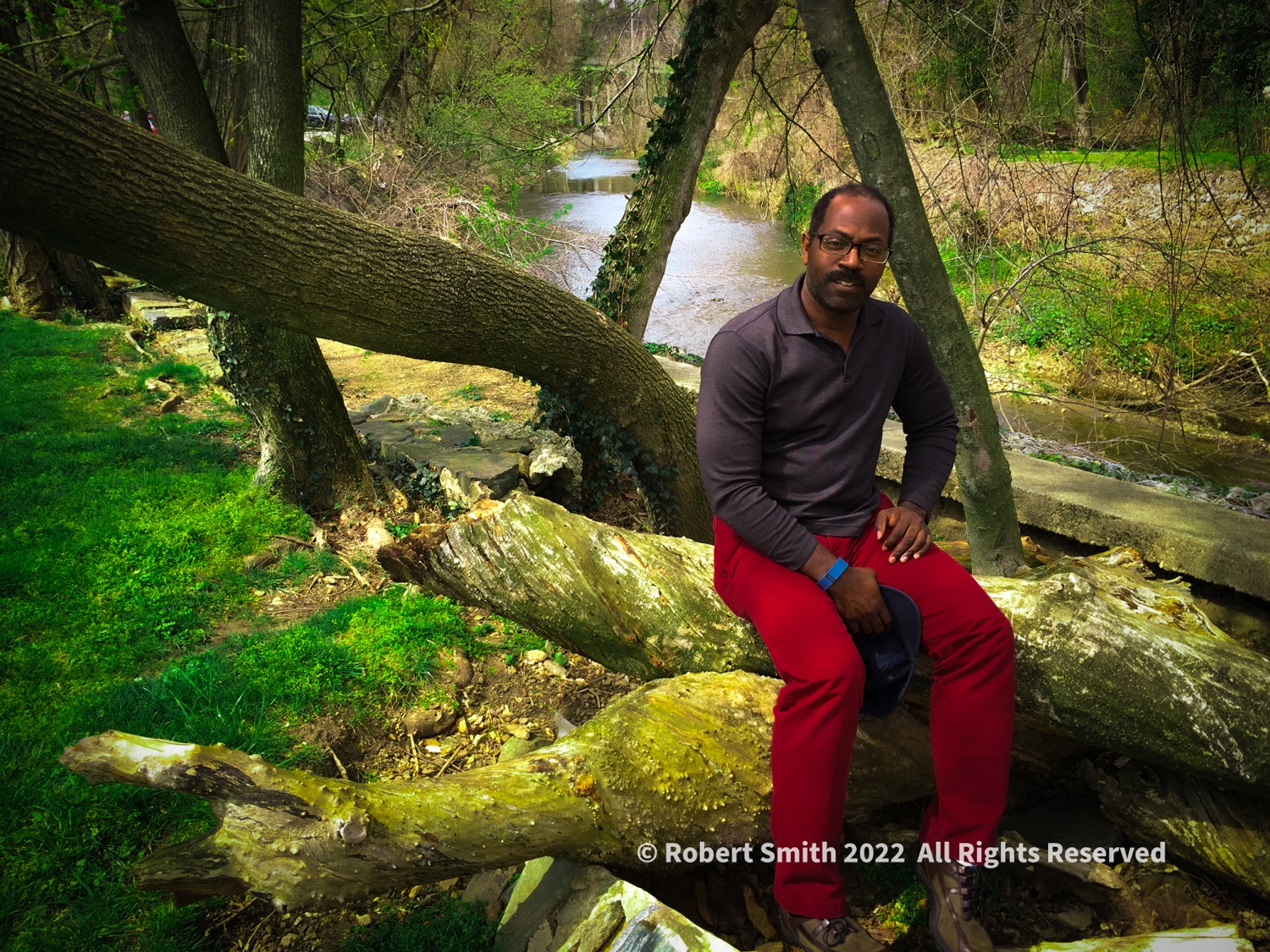
    A man sitting on a fallen tree trunk near a riverbank, surrounded by green grass and trees with budding leaves.

    Pip: Robert Snap Spot — where the photography is sharp and the philosophy hits you right between the eyes on a Thursday.

    Mara: Today we’re looking at a piece from Robert J Jr. that sits at the intersection of mindset and daily practice — specifically, the idea of choosing what you engage with and what you let go.

    Pip: Let’s start with that question of control.

    Thoughtful Thursday: Choosing What You Engage With

    Pip: The core tension here is one most people sidestep — not because they don’t care, but because it’s uncomfortable. What can you actually control, and what are you burning energy on that was never yours to manage?

    Mara: The post anchors itself to a Brian Tracy quote, and it’s worth reading directly: “You cannot control what happens to you, but you can control your attitude toward what happens to you, and in that, you will be mastering change rather than allowing it to master you.”

    Pip: That word — mastering — is doing real work there. It reframes the whole equation. You’re not surrendering to what happens; you’re deciding who’s in charge of the response.

    Mara: And the post keeps that framing deliberately light. The opening is almost disarmingly casual — “Ok, It really is not that hard. Relax.” That’s not dismissiveness; it’s an invitation to lower your defenses before the idea lands.

    Pip: Which is actually a pretty sophisticated move dressed up as a shrug.

    Mara: The closing line, “Now let’s live life to the fullest,” lands differently once you’ve sat with the Tracy quote. It’s not a bumper sticker — it’s a logical conclusion. If you’ve stopped fighting what you can’t control, you’ve freed up something.

    Pip: Freed up attention, freed up energy — the practical upshot is that the attitude shift Tracy describes isn’t just philosophical, it’s almost logistical.

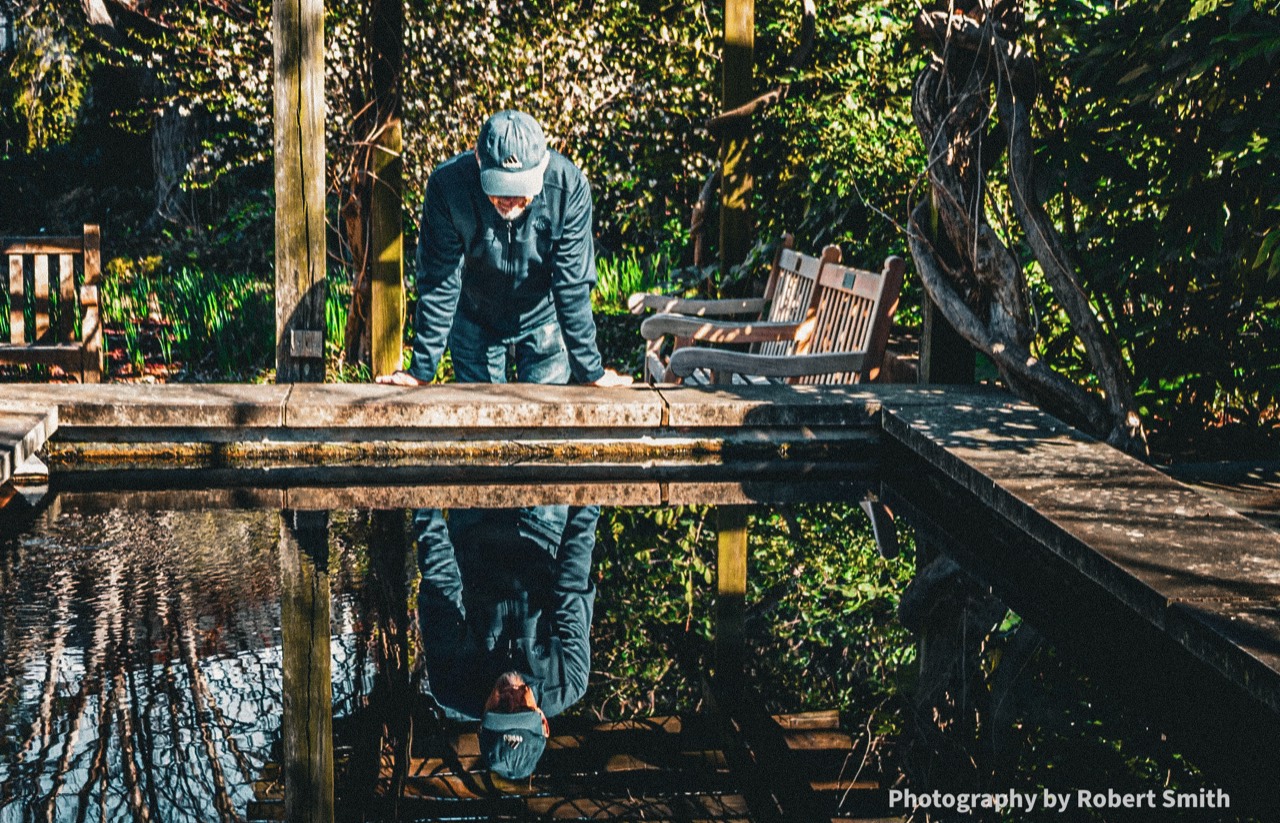
    Mara: The post pairs the reflection with photography, which fits the Thoughtful Thursday format. The image work and the words are doing the same thing — asking you to look at something ordinary and decide how you want to see it.

    Pip: That’s the habit underneath the habit, isn’t it — the practice of choosing your frame, literally and otherwise.


    Mara: The throughline today is really about agency — not over events, but over response.

    Pip: Small reframe, large consequence. More of that next time.

    Graphic illustration of several vintage cameras, some with light effects, arranged in a row.

    #RobertSnapSpot ##Jun2026 #TheSnapSpot #PhotographyPodcast #WordPressPodcast #PhotoBlogging #photog_enthusiasts #The_Snap_Spot #Lets_get_Snappin #Photography_Podcast ##mindset ##beauty #Attitude #Give_Up_Control #ThoughfulThursday ##Qoute #Brian_Tracy

  • The Snap Spot Podcast Episode 5: Healing the Planet

    The Snap Spot Podcast Episode 5: Healing the Planet

    Hands holding dark, rich soil with dirt on the fingers and palms, with a green plant in the background.

    Pip: Robert’s Snap Spot is where a phone camera and a poem can carry more environmental weight than a summit communiqué.

    Mara: Today we’re looking at work from Robert J Jr. — specifically a post where nature photography and poetry meet to ask who actually heals the planet, and how.

    Pip: Let’s start with that question.

    Healing the Planet

    Mara: This post arrives as part of Cellpic Sunday — a regular feature pairing iPhone photography with a broader theme. Here the theme is global environmental responsibility, and the framing question is pointed: who actually does the healing, and where does it happen?

    Pip: The post anchors on a poem by Alfred K. LaMotte, and it does not flatter the powerful. The setup is a direct challenge to top-down thinking: “This planet will not be healed by powerful politicians in big cities who spend trillions on a global strategy that never quite begins.”

    Mara: What that means in practice is a full redirect of where environmental hope is supposed to live. Not in institutions. Not in summits. The poem moves the camera — if you’ll forgive the metaphor — all the way down to the backyard.

    Pip: And LaMotte is specific about what that looks like. Villagers who sing. Backyard gardeners. People who “walk more slowly right here” and “feel the green through bare soles.” The scale collapses from global strategy to bare feet on soil, and somehow that feels more credible than the alternative.

    Mara: There’s also something deliberate in the pairing of medium and message. The photographs are taken with an iPhone 15 Pro Max — consumer technology, personal scale — and the subjects are flowers, nature, the immediate and local. The tool matches the argument the poem is making.

    Pip: A trillion-dollar climate accord and a backyard gardener both reach for the same goal, and only one of them is apparently getting anywhere.

    Mara: The poem closes on “awakening the heirloom seeds of the heart” — which pulls the environmental frame into something more interior. Healing the planet, in LaMotte’s reading, starts with something cultivated inside people before it shows up in soil.

    Pip: So the post is doing two things at once: it’s a photography showcase and a quiet argument that presence, attention, and small human acts are the actual mechanism of change.

    Mara: And the images carry that argument without captioning it — flowers, light, the immediate world at close range.


    Mara: The local and the personal as the real site of change — that’s a thread worth following.

    Pip: Next time, on the Snap Spot, we’ll see where it leads.

    Graphic illustration of several vintage cameras, some with light effects, arranged in a row.

    #RobertSnapSpot ##Jun2026 #TheSnapSpot #PhotographyPodcast #WordPressPodcast #PhotoBlogging #photog_enthusiasts #The_Snap_Spot #Lets_get_Snappin #Photography_Podcast ##nature ##naturephotography ##beauty ##Globalphotography #Environmental_Care #The_Healing ##Poetry #Alfred_K_LaMotte ##Environmentalphotography

  • The Snap Spot Podcast Episode 4: My Lens, Your Focus.: After the Veterans Day: Yeah, I’m Still a Veteran!

    The Snap Spot Podcast Episode 4: My Lens, Your Focus.: After the Veterans Day: Yeah, I’m Still a Veteran!

    Pip: Robert’s Snap Spot — where the camera is always loaded and the reflection is usually personal.

    Mara: Today we’re spending time with a post from Robert J Jr. that sits at the intersection of identity, memory, and what it means to keep carrying a title long after the official day for it has passed.

    Pip: Let’s start with what it means to still be a veteran on November 16th.

    After the Veterans Day: Yeah, I’m Still a Veteran!

    Mara: The question this post is sitting with is a deceptively simple one — Veterans Day comes and goes on the calendar, but the identity doesn’t clock out with it. What does it look like to claim that title on an ordinary Tuesday?

    Pip: The post answers that question visually. The framing is “Portraits of Me,” shot at Georgia Veterans State Park in Cordele, Georgia — and the title itself does the argumentative work: “After the Veterans Day: Yeah, I’m Still a Veteran!”

    Mara: That “Yeah” is doing real labor. It’s not a gentle reminder — it’s a pushback. The implication is that public attention compresses around a single date, and the person wearing the uniform in those portraits is there every other day of the year too.

    Pip: Georgia Veterans State Park is a considered location choice. It’s not a generic backdrop — it’s ground that already carries the weight of military memory, which means the self-portrait lands inside a larger conversation rather than beside it.

    Mara: The post’s tag set is worth pausing on. It pulls together photography craft — Lightroom, iPhone photography, a photographer’s eye — alongside tags for Army, Air Force, Coast Guard, Marines, and Iraq War. That range signals the image is meant to speak across branches, not just to one corner of the veteran community.

    Pip: So the photograph is doing double duty: personal testimony and open invitation. Which, honestly, is what the best portrait work does — it makes the specific feel like it belongs to everyone who recognizes something in it.

    Mara: And the emotional register in those tags — honor, love, patriotism, respect, service — isn’t incidental. Those are the words the post explicitly wants the image to carry. The visual and the language are working in the same direction.

    Pip: A portrait taken eleven days after Veterans Day, on purpose, at a park built for this exact kind of remembering. The calendar said the moment passed. The post disagrees.


    Mara: Identity doesn’t observe holidays. That’s the real argument here.

    Pip: Next time, more from the Snap Spot — where the shutter stays open.

    Graphic illustration of several vintage cameras, some with light effects, arranged in a row.

    #RobertSnapSpot ##Jun2026 #VeteransDay #thankaveteran #militarymemories #TheSnapSpot #PhotographyPodcast #VeteransDay #WordPressPodcast

  • The Snap Spot Podcast Episode 3: Tattoo Photography: Written on my Heart (and) Back

    The Snap Spot Podcast Episode 3: Tattoo Photography: Written on my Heart (and) Back

    Pip: Robert’s Snap Spot is where a camera — or in today’s case, an iPhone 4 — becomes a way of reading people, places, and the stories they carry on their skin.

    Mara: Robert J Jr. brings us into tattoo culture this episode, exploring how ink on the body becomes a form of personal history. Let’s start with what it means to photograph something that was never meant to be decoration.

    Tattoo Photography: Written on the Skin

    Pip: The premise of this segment is a real question: what does it take to photograph a tattoo and have the image carry the same weight as the art itself — not just document it, but honor it?

    Mara: The post frames tattoo culture as something layered and intentional, and it opens with a quote from Walter Curlewis Photography: “Your body is a canvas, and your tattoos are the story painted on it.”

    Pip: That framing shifts the whole project. If the body is a canvas, then photographing a tattoo isn’t portraiture and it isn’t product photography — it’s something closer to documenting a living artwork with its own biography.

    Mara: The New Orleans back tattoo captured here is the concrete example. Shot on an iPhone 4, it’s a reminder that the gear is almost beside the point when the subject has that kind of presence.

    Pip: An iPhone 4, for the record, is old enough to have its own origin story — which feels appropriate given the subject matter.

    Mara: The post pairs that image with a second line: “Ink runs deeper than skin — it tells the story of the soul.” That’s the emotional argument the whole series is building toward. Tattoo Photography: Written on my Heart (and) Back isn’t treating ink as aesthetic. It’s treating it as autobiography.

    Pip: And photographing autobiography requires a different kind of attention — you’re not just composing a shot, you’re being trusted with someone’s history.

    Mara: That’s what the Tattoo Series as a whole seems to be after: not a catalog of designs, but a record of why people choose to write on themselves permanently.

    Pip: Which makes New Orleans a fitting place to start — a city that has never been shy about wearing its own story out loud.

    Mara: The images and the quotes together make the case that the camera, whatever camera, is just the tool. The subject is always the meaning underneath.


    Pip: Skin as autobiography, New Orleans as backdrop — there’s a whole archive of untold stories in a single frame.

    Mara: Next time, more of what the city and the people in it choose to show.

    Graphic illustration of several vintage cameras, some with light effects, arranged in a row.

    #RobertSnapSpot ##Jun2026 #TheSnapSpot #PhotographyPodcast #WordPressPodcast #PhotoBlogging #photog_enthusiasts #The_Snap_Spot #Lets_get_Snappin #Photography_Podcast #TattooSeries #TattooCulture #Tattoo_quotes

  • The Snap Spot Podcast Episode 2: My Lens, Your Focus.

    The Snap Spot Podcast Episode 2: My Lens, Your Focus.

    Pip: Robert’s Snap Spot — where the camera is always within reach and the cats are never far from the frame.

    Mara: Today we’re digging into a post from Robert J Jr. that doubles as a personal manifesto — what drives someone to photograph, who they are behind the lens, and what they’re inviting you to see.

    Pip: Let’s start with the lens itself — and the person holding it.

    My Lens, Your Focus

    Pip: This post isn’t a gallery or a tutorial. It’s an introduction — a statement of who Robert is and what he’s asking you to notice when you look at his work.

    Mara: He sets the stakes plainly right at the top: “tell my story though pictures, and if you look closely, you will see your story too.”

    Pip: That’s the whole premise. The photographs aren’t just his — they’re a mirror. If he does his job, you recognize something of yourself in what he’s captured.

    Mara: And the life behind the lens is substantial. Twenty-three years in the Army, four tours in Iraq, Kosovo, Somalia — he’s seen the world in ways most people haven’t, and he names “joy is the true measure of success” as the lesson that stuck.

    Pip: Which reframes every photo he posts. This isn’t someone shooting for likes. It’s someone who’s earned a particular relationship with what a good moment looks like.

    Mara: He’s also specific about what delights him — cats named Benny and Boopers, Sci-Fi, comics, antiques, music on an iPhone. The list reads like a personality, not a résumé.

    Pip: Fair warning: he does promise a plethora of cat photos, and that is not a word he’s using loosely.

    Mara: He wraps with a direct invitation — pick up a camera or an iDevice and take some photos. The blog isn’t meant to be consumed passively. It’s a nudge.

    Pip: Art in more places than a museum. That’s the line that earns the whole post its title.

    Mara: Exactly — “you will agree that there is art in more places than what’s just in a museum.” That’s the underlying argument of Robert’s Snap Spot as a project, not just this one post.


    Pip: Joy as the measure of success, a camera as the tool — that’s a quiet but sturdy philosophy.

    Mara: Next time, more of what the lens finds. Stay close.

    Graphic illustration of several vintage cameras, some with light effects, arranged in a row.

    #My_Lens #Your_Focus #RobertSnapSpot ##Jun2026 #TheSnapSpot #PhotographyPodcast #WordPressPodcast #desktopblogging #PhotoBlogging #photog_enthusiasts #The_Snap_Spot #Lets_get_Snappin #Photography_Podcast 

  • The Snap Spot Podcast Episode 1: Aperture, Your View of My World

    The Snap Spot Podcast Episode 1: Aperture, Your View of My World

    Pip: Robert’s Snap Spot — where the aperture is wide open and so is the welcome mat.

    Mara: Today we’re covering Robert J Jr.’s introduction to the site — who he is, what gear he shoots with, and what the whole project is actually about. Let’s start with the lens he’s using to frame everything: aperture, and what it means for how he’s sharing his world.

    Aperture, Your View of My World

    Pip: The title does real work here — aperture isn’t just a camera term, it’s the organizing metaphor for the entire site. The question is: what does it actually mean to open up a photography journey to an audience, and where does this one begin?

    Mara: The post frames it directly: “Like the opening of a lens to allow light in, I am opening up — exposing if you will, the depth of — my world of photography and my journey through photos to you, my fellow photog enthusiasts.”

    Pip: So this isn’t a gear review or a tutorial. It’s an invitation — the site is the journey itself, shared in real time with people who already love the craft.

    Mara: And the journey has a clear arc. It starts with a Sony Cyber-shot and a FUJI FinePix, moves through a Nikon D3200 and a Canon Rebel SLR1, and lands in 2026 on a Canon EOS R100. Mobile has kept pace — from an iPhone 8 Plus to a 15 Pro Max, and from an older iPad Air to the current iPad Pro M4, which he specifically calls out for video and photo editing.

    Pip: That progression from entry-level DSLRs to a mirrorless Canon and a tablet that could edit a feature film is a pretty honest map of how photography obsessions tend to evolve.

    Mara: He’s candid about the learning curve too: “I can’t say I’m a Nikon man nor Canon fan because I like both. So far on my journey into photography land I’ve learned I have lots more to learn.” That’s the spirit the whole site seems to be built on — curiosity over expertise.

    Pip: And the shooting philosophy matches: not one careful frame, but every angle, every close-up, the whole scene.

    Mara: Exactly — “I love taking photos of everything. I always have. And not just one photo — I need to take every angle and close-ups too.” The site is that instinct, documented.


    Pip: Wide aperture, deep field — sounds like a site worth following into whatever gets snapped next.

    Mara: The gear will keep evolving. The curiosity clearly won’t. Next episode, more from the Snap Spot.

    Graphic illustration of several vintage cameras, some with light effects, arranged in a row.

    #RobertSnapSpot ##Jun2026 #TheSnapSpot #PhotographyPodcast #WordPressPodcast #desktopblogging #Aperture #Upgrade #Your_Focus #PhotoBlogging #photog_enthusiasts #The_Snap_Spot #Lets_get_Snappin #Photography_Podcast