The beauty of the natural processes, decay and growth. Plants sprout and intertwine as iron fences rust from the elements. Life’s cycle side by side, it’s truly amazing.
Neal and I have been house sitting on the Moon River at The Landings on Skidaway Island. The island has been a choice place to build expensive homes and condos for years.
One thing most of these residents seem to forget; wildlife was here before them and wildlife is still present. After all Skidaway Island State Park is located at the entrance to the island.
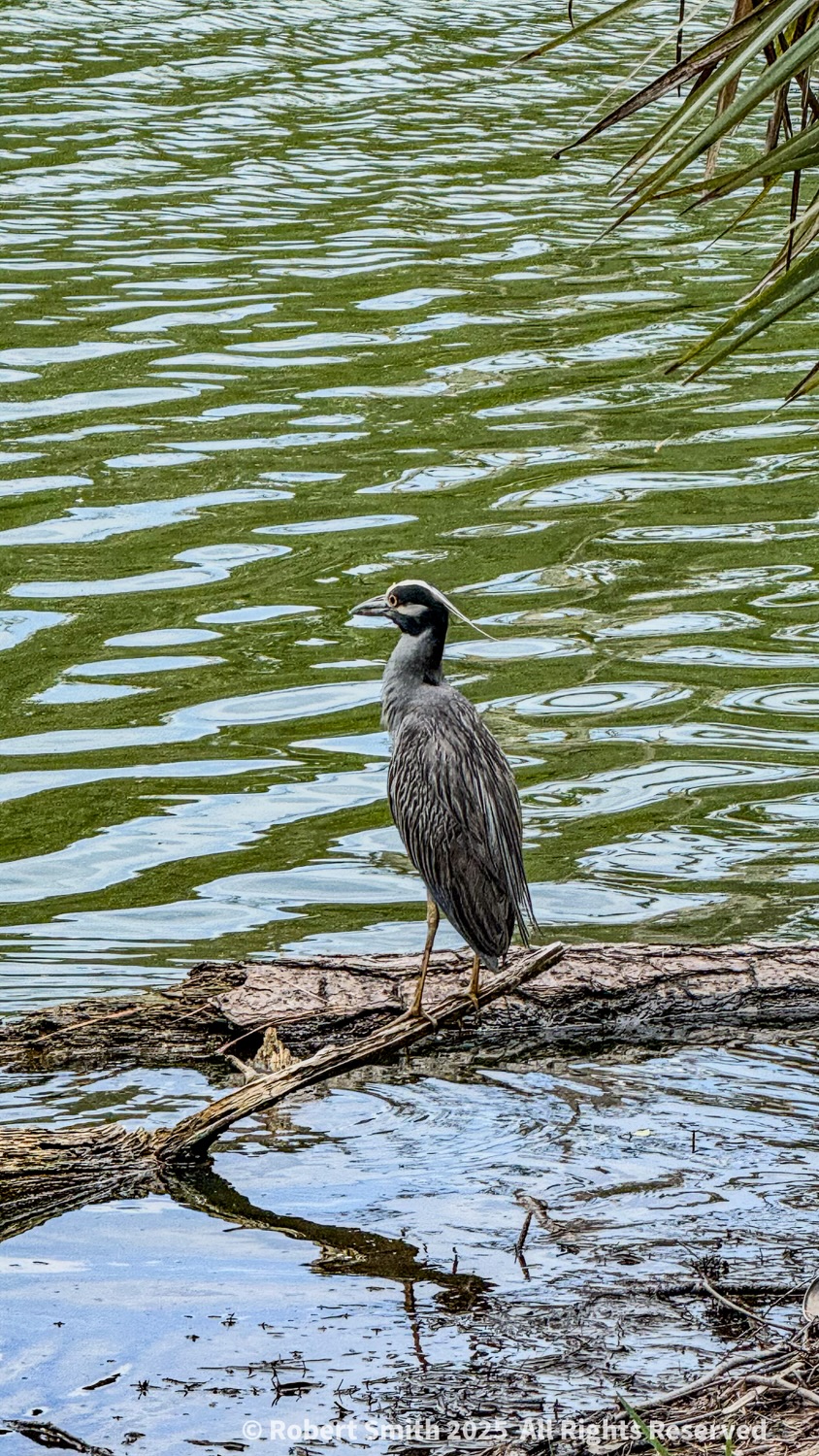
The Landings Association has really done a good job of keeping lots of the native habitat although there are houses everywhere. One day we traveled to a marina nearby and found a gorgeous lagoon teaming with birds and aquatic animals. Instantly we fell in love!
Yellow Crowned Night Heron Lagoon on Skidaway
Photos taken with my iPhone 15 Pro Max and Canon EOS R100.
Pip: Robert’s Snap Spot is where a camera — or in today’s case, an iPhone 4 — becomes a way of reading people, places, and the stories they carry on their skin.
Mara: Robert J Jr. brings us into tattoo culture this episode, exploring how ink on the body becomes a form of personal history. Let’s start with what it means to photograph something that was never meant to be decoration.
Tattoo Photography: Written on the Skin
Pip: The premise of this segment is a real question: what does it take to photograph a tattoo and have the image carry the same weight as the art itself — not just document it, but honor it?
Mara: The post frames tattoo culture as something layered and intentional, and it opens with a quote from Walter Curlewis Photography: “Your body is a canvas, and your tattoos are the story painted on it.”
Pip: That framing shifts the whole project. If the body is a canvas, then photographing a tattoo isn’t portraiture and it isn’t product photography — it’s something closer to documenting a living artwork with its own biography.
Mara: The New Orleans back tattoo captured here is the concrete example. Shot on an iPhone 4, it’s a reminder that the gear is almost beside the point when the subject has that kind of presence.
Pip: An iPhone 4, for the record, is old enough to have its own origin story — which feels appropriate given the subject matter.
Mara: The post pairs that image with a second line: “Ink runs deeper than skin — it tells the story of the soul.” That’s the emotional argument the whole series is building toward. Tattoo Photography: Written on my Heart (and) Back isn’t treating ink as aesthetic. It’s treating it as autobiography.
Pip: And photographing autobiography requires a different kind of attention — you’re not just composing a shot, you’re being trusted with someone’s history.
Mara: That’s what the Tattoo Series as a whole seems to be after: not a catalog of designs, but a record of why people choose to write on themselves permanently.
Pip: Which makes New Orleans a fitting place to start — a city that has never been shy about wearing its own story out loud.
Mara: The images and the quotes together make the case that the camera, whatever camera, is just the tool. The subject is always the meaning underneath.
Pip: Skin as autobiography, New Orleans as backdrop — there’s a whole archive of untold stories in a single frame.
Mara: Next time, more of what the city and the people in it choose to show.
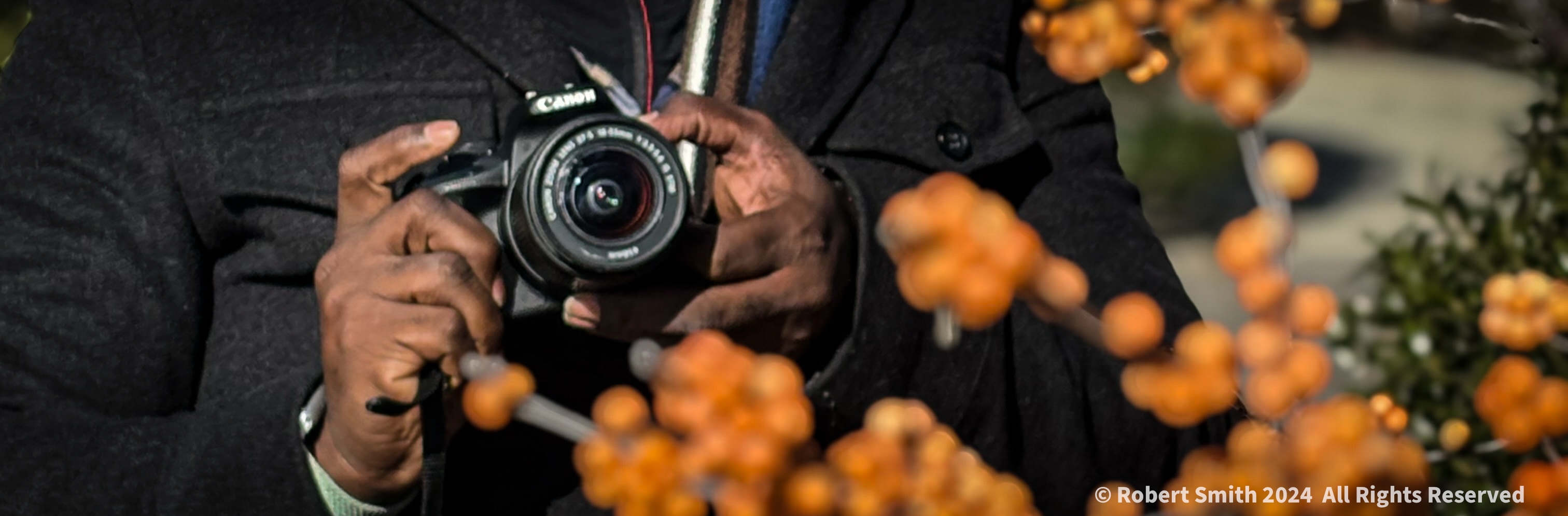
Lately I have had my trusty iPhone Pro Max in my hand everywhere I go. I recently remembered why I loved the feel of an actual “camera”, my Canon. The experience is night and day. The approach, totally different and satisfying too. So I decided that I will no longer deny myself and with camera in hand, get back out there and start “Snapping” 📸
Pip: Robert’s Snap Spot — where the camera is always within reach and the cats are never far from the frame.
Mara: Today we’re digging into a post from Robert J Jr. that doubles as a personal manifesto — what drives someone to photograph, who they are behind the lens, and what they’re inviting you to see.
Pip: Let’s start with the lens itself — and the person holding it.
My Lens, Your Focus
Pip: This post isn’t a gallery or a tutorial. It’s an introduction — a statement of who Robert is and what he’s asking you to notice when you look at his work.
Mara: He sets the stakes plainly right at the top: “tell my story though pictures, and if you look closely, you will see your story too.”
Pip: That’s the whole premise. The photographs aren’t just his — they’re a mirror. If he does his job, you recognize something of yourself in what he’s captured.
Mara: And the life behind the lens is substantial. Twenty-three years in the Army, four tours in Iraq, Kosovo, Somalia — he’s seen the world in ways most people haven’t, and he names “joy is the true measure of success” as the lesson that stuck.
Pip: Which reframes every photo he posts. This isn’t someone shooting for likes. It’s someone who’s earned a particular relationship with what a good moment looks like.
Mara: He’s also specific about what delights him — cats named Benny and Boopers, Sci-Fi, comics, antiques, music on an iPhone. The list reads like a personality, not a résumé.
Pip: Fair warning: he does promise a plethora of cat photos, and that is not a word he’s using loosely.
Mara: He wraps with a direct invitation — pick up a camera or an iDevice and take some photos. The blog isn’t meant to be consumed passively. It’s a nudge.
Pip: Art in more places than a museum. That’s the line that earns the whole post its title.
Mara: Exactly — “you will agree that there is art in more places than what’s just in a museum.” That’s the underlying argument of Robert’s Snap Spot as a project, not just this one post.
Pip: Joy as the measure of success, a camera as the tool — that’s a quiet but sturdy philosophy.
Mara: Next time, more of what the lens finds. Stay close.